The U.S. economy grew at a faster pace than expected in the first quarter and posted its best growth to start a year in six years.
First-quarter GDP expanded by 3.2% in the first quarter, the Bureau of Economic Analysis said. Economists polled by Dow Jones expected the U.S. economy increased by 2.5% in the first quarter. It was the first time since 2013 that first-quarter GDP topped 3%.
Disposable personal income increased by 3%, while prices increased by 1.3% when excluding food and energy. Overall prices climbed by 0.8% in the first quarter.
"The upside beat was helped by net trade (exports jumped while imports contracted sharply) and inventories which combined contributed almost 170 bps of the rise," wrote Peter Boockvar, chief investment officer at Bleakley Advisory Group.
Friday's data was the first look at how the economy fared during the longest government shutdown in history. The federal government ceased operations for 35 days between late December and Jan. 25 amid a standoff between the Trump administration and congressional leaders over funding for a wall along the U.S.-Mexico border.
Investors were closely watching out for the report as they looked for more confirmation that a recession may not be in the cards over the short term.
The S&P 500 is up 16.7% this year after the Federal Reserve reversed course in its path to tighter monetary policy, easing fears that a recession may be imminent.
Uber on Friday set a price range of $44 to $50 per share for its IPO in an updated filing, giving it a market cap of 83.8 billion at the high end. That's far less than expected.
The company, which is beginning its initial public offering road show on Friday, seeks to raise about $9 billion in cash in its IPO and will tender 180 million shares.
On a fully diluted basis, Uber's valuation would be $80.53 billion on the low end of the range and $91.51 billion on the high end.
Early reports suggested Uber could be valued as high as $120 billion. Even at the high end of Uber's range, its valuation would be well below what many expected. The company's market cap would be $73.7 billion at the low end of its range. Uber's last private valuation was about $76 billion.
Also Friday, PayPal announced that it will invest $500 million in Uber. PayPal CEO Dan Schulman said in a statement on LinkedIn that PayPal is extending its current partnership with Uber to build Uber's digital wallet system. PayPal will buy $500 million worth of Uber stock at the IPO price.
Uber also reported its first-quarter 2019 financials. The company reported revenue of about $3 billion and a net loss of about $1 billion.
Uber is expected to go public early next month on the NYSE under the ticker UBER. Its IPO will happen a little over a month after its chief rival Lyft's IPO. Lyft saw its shares drop significantly in the weeks since its March IPO, which could have put a damper on Uber's valuation. Lyft has a market cap of about $16 billion.
Uber on Friday set a price range of $44 to $50 per share for its IPO in an updated filing, giving it a market cap of nearly $84 billion at the high end.
The company, which is beginning its initial public offering road show on Friday, seeks to raise about $9 billion in cash in its IPO and will offer 180 million shares.
On a fully diluted basis, Uber's valuation would be $80.53 billion on the low end of the range and $91.51 billion on the high end.
Early reports suggested Uber could be valued as high as $120 billion. Even at the high end of Uber's range, its valuation would be far less than many expected. The company's market cap would be $73.7 billion at the low end of its range. Uber's last private valuation was about $76 billion.
PayPal also announced Friday that it invested $500 million in Uber. PayPal CEO Dan Schulman said in a statement on LinkedIn that PayPal is extending its current partnership with Uber to build out Uber's digital wallet system. PayPal will buy $500 million worth of Uber stock at the IPO price.
Uber is expected to go public in early May on the NYSE under the ticker UBER. Its IPO will happen a little over a month after its chief rival Lyft. Lyft saw its shares drop significantly in the weeks since its IPO, which could have put a damper on Uber's valuation. Lyft has a market cap of about $16 billion.
Uber set a price range of $44 to $50 per share for its IPO Friday in an updated filing. It would have a market cap of about $84 billion at the high end of the range.
The company seeks to raise about $10 billion in its IPO and will offer 180 million shares. The company will begin its IPO roadshow on Friday.
Early reports suggested Uber could be valued as high as $120 billion. Even at the high end of Uber's range, its valuation would be far less than many expected. The company's market cap would be $73.7 billion at the low end of its range. Uber's last private valuation was about $76 billion.
Uber is expected to go public in early May, a little over a month after its chief rival Lyft. Lyft saw its shares drop significantly in the weeks since its IPO, which could have put a damper on Uber's valuation. Lyft has a market cap of about $16 billion.
Get the Morning Brief sent directly to your inbox every Monday to Friday by 6:30 a.m. ET. Subscribe
WHAT TO WATCH
Economists are looking forward to a solid first-quarter GDP print after several key sectors of the U.S. economy took a last-ditch turn higher at the close of the quarter.
The Bureau of Economic Analysis will release its initial read of U.S. economic growth during the first three months of the year Friday at 8:30 a.m. ET.
Over the past several weeks, analysts have been upwardly revising their expectations for economic expansion during the period amid better-than-expected data on segments including retail sales, exports and business inventories.
As of Thursday, expectations ran the gamut, with the Atlanta Fed’s closely watched GDPNow tool tracking 2.7% quarterly growth, while the New York Fed’s NowCast report looked for 1.4% expansion. Other estimates largely fell within this range, with consensus among economists polled by Bloomberg calling for 2.3% growth, and the St. Louis Fed’s GDP Nowcast estimate pointing to 1.9% growth.
In the fourth quarter, GDP grew at an annualized pace of 2.2%. Growth was 2% in the first quarter of 2018.
The Uber logo is seen displayed on a mobile device in this photo illustration in Warsaw, Poland on March 19, 2019. (Photo by Jaap Arriens/NurPhoto via Getty Images)
Uber lowers IPO valuation, will unveil terms: Ride-hailing company Uber Technologies Inc will unveil terms for its initial public offering on Friday, telling investors it will seek to be valued at between $80 billion and $90 billion, according to people familiar with the matter. The valuation sought is less than the $120 billion valuation that investment bankers told Uber last year it could fetch. [Reuters]
Amazon earnings beat expectations by a wide margin: Amazon (AMZN) reported earnings of $7.09 per share, crushing expectations of $4.67. The e-commerce giant reported $59.7 billion in sales for the first quarter of 2019 on Thursday, which is inline with analyst estimates. That fell into the higher range of the guidance the company provided in January, which was net sales of $56 billion to $60 billion. [Yahoo Finance]
Crypto market roiled by new allegations: One of the world’s most widely traded virtual currencies faces renewed doubts about its stability, after New York’s top cop accused the coin’s issuer of participating in a cover-up to hide the loss of about $850 million in client and corporate funds. The allegations against Tether and the operator of cryptocurrency exchange Bitfinex, announced by the New York attorney general on Thursday. [Bloomberg]
Starbucks posts strong Q2 growth, boosted by US and China sales: Starbucks (SBUX) on Thursday reported better-than-expected earnings, boosted by strong sales in U.S. and China, and raised its full year guidance. The global coffee giant posted earnings per share of 60 cents per share during its fiscal second quarter, compared to 53 cents per share a year ago. [Yahoo Finance]
Ford just embarrassed the hell out of its pickup truck rivals: The maker of the popular F-Series line of trucks said Tuesday it gained market share and grew revenue in its pickup truck category in the first quarter. With F-Series pickups being some of the highest margin products rolling off Ford’s (F) assembly lines, it helped power profits in North America $300 million higher from a year ago. [Yahoo Finance]
Amazon revolutionized online shopping and quickly became one of the most ubiquitous and successful businesses in the world. This is in part owed to it always being on the forefront of reinvestment without pausing to actually earn money. To get ahead of its retail competitors, the company announced that it's working on bringing free one-day deliveries to its Prime members during its earnings calls on Thursday.
Currently, Amazon's annual subscription service qualifies you to free two-day shipping with most products, and only when you order items totaling more than $35 do you receive free one-day shipping. The upcoming faster delivery will come at no additional cost or conditions for paying Prime members, though.
The company says it's working hard with its logistics partners to achieve this faster delivery to an ever-growing number of places in the US. However, it states that it will take a significant amount of time until the service is fully deployed and that it will give us additional information about its efforts in this year's second quarter. What we know now is that the service will start rolling out in the US and will be available globally eventually.
The announcement comes shortly after Amazon's quarterly earnings calls, where it revealed that its retail income is slowing, which is not surprising since a business can only grow so big. To retain customers, the company has to give them more incentives to keep them loyal to its online shop. While Amazon could wish for even more growth in retail, that doesn't mean it's in any financial trouble – today most of the internet behemoth's income comes from its cloud storage business, Amazon Web Services (AWS).
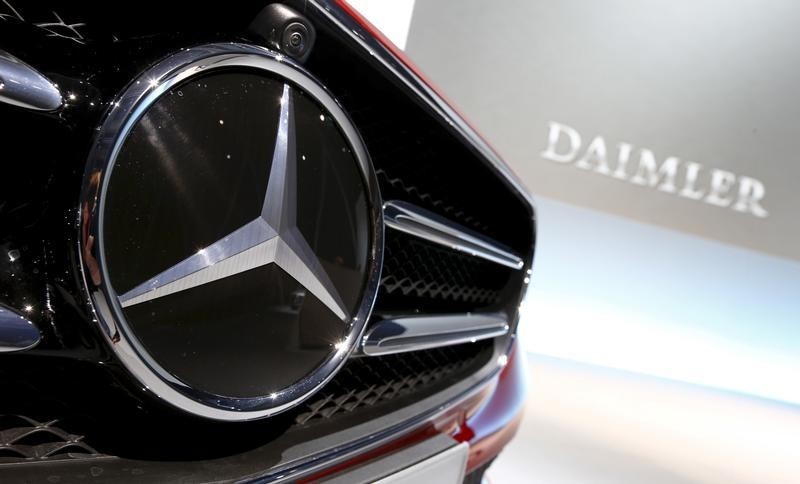
The troubles affecting Europe’s automakers are on full display Friday, as both Mercedes parent Daimler (DE:) and France’s Renault (PA:) reported falling sales in the first quarter.
The sold 7% fewer vehicles in the first quarter than it did a year earlier, with declines in all three of its most important regions – China (3%), Europe (4%) and the U.S. (9%). Earnings before interest and tax slid 16% although, at 2.8 billion euros ($3.1 billion), they still beat consensus forecasts by nearly 10%.
Even though outgoing Chief Executive Dieter Zetsche reaffirmed the company’s full-year outlook, the company’s shares were still down 0.3% on the news. That was lagging the local index, which was broadly unchanged.
The benchmark index was also flat, losing 0.12 points – less than 0.1% to 390.02. The U.K. was down 0.2%.
Daimler is facing a steep rise in investment obligations as it migrates to electric vehicles, along with its German peers Volkswagen (DE:) and BMW (DE:). The three are all facing the prospect of fines from the European Commission for colluding to keep sub-optimal diesel engines on the road when they had better technology available to deploy.
Renault has problems of a slightly different nature, most obviously in the enormous distraction created by the criminal charges against its long-time CEO Carlos Ghosn. The Wall Street Journal is reporting Friday that the French company is preparing to propose a merger with Nissan, its Japanese partner, hoping to restore a relationship that has been badly strained by the Ghosn affair.
Renault's greater exposure to emerging markets such as Turkey and Argentina has hurt it in recent months, and like its European rivals it has had to abandon hopes of making money in Iran in the wake of President Donald Trump’s decision to tighten sanctions on the country.
Renault’s sales were down 5.6%, although it eked out a 2% gain in Europe, its most important market. As a result, its shares outperformed the local , rising 1.7%.
Europe’s other carmakers such as Volvo (OTC:) and Peugeot (PA:) have also reported weak first quarters.
Disclaimer:Fusion Media would like to remind you that the data contained in this website is not necessarily real-time nor accurate. All CFDs (stocks, indexes, futures) and Forex prices are not provided by exchanges but rather by market makers, and so prices may not be accurate and may differ from the actual market price, meaning prices are indicative and not appropriate for trading purposes. Therefore Fusion Media doesn`t bear any responsibility for any trading losses you might incur as a result of using this data.
Fusion Media or anyone involved with Fusion Media will not accept any liability for loss or damage as a result of reliance on the information including data, quotes, charts and buy/sell signals contained within this website. Please be fully informed regarding the risks and costs associated with trading the financial markets, it is one of the riskiest investment forms possible.